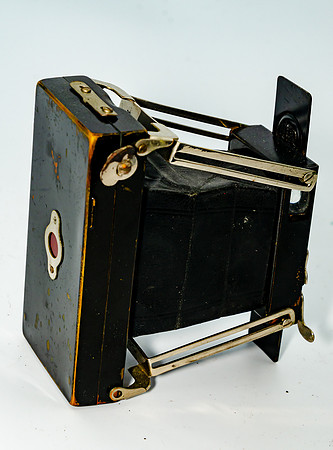
The Ensignette (c.1909–1915) was a compact, affordable roll‑film folding camera that helped make daylight‑loadable snapshot photography widely available in Britain and the Empire; examples and documentation are held by specialist collections and the maker Houghton/Ensign’s archives, so you can often find originals at UK auctions or specialist dealers.
Short history and context
• Origin: The Ensignette was developed by Houghtons Ltd (later Houghton‑Butcher / Ensign) and introduced as a small, pocketable Ensign roll‑film camera in the 1900s; the design was influenced by Swedish engineer Magnus Niéll and by Houghtons’ push into roll‑film products after 1903.
• Period of importance: The Ensignette and related small Ensign models were best‑sellers in the 1909–1915 era, helping Houghtons become one of Britain’s largest camera manufacturers by 1908.
Why the Ensignette mattered
• Democratised snapshot photography: It used daylight‑loadable roll film and a folding, pocketable body, making photography cheaper, easier and more portable for amateurs compared with plate cameras.
• Commercial impact: The Ensignette helped establish the Ensign roll‑film brand, which became central to Houghtons’ business model and later to the Ensign trade name used across the British Empire.
Identification and authentication (what to look for)
• Maker marks: “Ensign” or Houghtons trade name on the body or lens plate; early examples often carry the Ensign flag logo introduced c.1911.
• Form factor: Small folding roll‑film body (pocketable), simple meniscus or small compound lens, and a daylight‑loading film spool or cassette typical of Ensign roll systems.
• Accessories & packaging: Original box, instruction leaflet, and simple brilliant finder increase authenticity and value.
Market, value, and collecting tips
• Typical auction range: Common, worn Ensignettes usually sell for modest sums (often under GBP 100–200); complete, boxed, or silver‑cased examples can fetch higher prices from collectors.
• Buying tips: Request interior photos (film chamber, maker marks), confirm the folding mechanism and shutter action, and beware of later‑period reprofiling or relabelled bodies.
Risks, limitations, and preservation
• Film obsolescence: Original Ensign roll film is obsolete; shooting or restoring requires specialist adaptation or custom spools.
• Condition issues: Leatherette peeling, weakened bellows, and corroded fittings are common; these reduce value and can be costly to repair.
Where to look
• Local sources: watch Webbs and Thornton estate auctions for occasional British camera lots; specialist UK dealers and online auction platforms are the most reliable sources for Ensignettes.