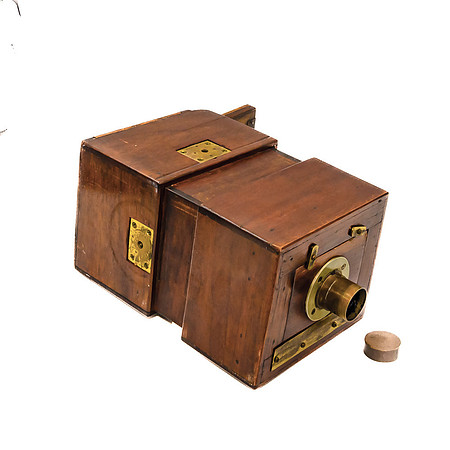
The
sliding box camera—a design widely used from the 1830s through the 1870s—was significant because it introduced the first
practical, adjustable, and reproducible camera architecture. By around
c.1870, its importance lay not in being newly invented (it dates back earlier) but in how it
enabled the photographic processes of the era and shaped the transition toward more advanced large‑format and plate cameras.
📌 Core significance (concise takeaway)
The
sliding box camera was the first major camera design that allowed
precise focusing,
interchangeable light‑sensitive plates, and
repeatable image-making, forming the foundation of all later large-format view cameras. Its continued use into the 1870s made photography more practical, portable, and technically controlled.📷 What the sliding box camera introduced 1.
Adjustable focus through a two‑box system The camera consisted of:
-
An outer box with the lens. -
An inner box that slid forward/backward for focusing on a ground glass screen.
This was the first widely adopted method for
accurate focusing, essential for portraiture and landscape work