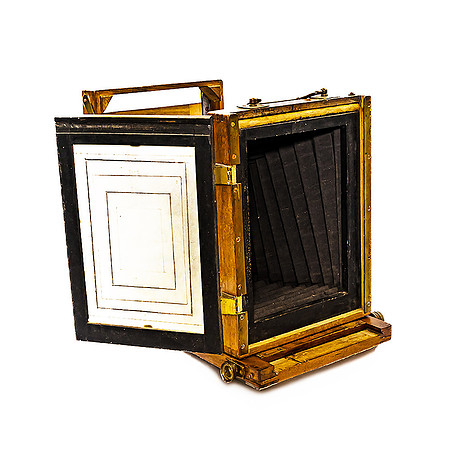
The Demaria‑Lapierre cameras of around 1900 sit at a turning point in French photographic design—right as the industry shifted from bulky plate cameras to compact “detective” and jumelle (binocular‑style) cameras. The company’s early 1900 models, especially the Capsa series, reflect this transition with innovative multi‑plate systems and portable construction. Below is a clear, structured explanation of the evolution of the camera and where Demaria‑Lapierre fits into that story.
📷 Demaria‑Lapierre (c.1900): Company Background
Demaria‑Lapierre was formed after a long evolution of the Demaria family’s photographic business:
• 1858 — Isidore Demaria founds the original Paris workshop.
• 1897 — Company becomes Demaria Frères (Demaria Brothers).
• 1908 — Merger with Auguste Lapierre’s firm (magic lanterns & wooden cameras) creates Société Anonyme des Établissements Demaria‑Lapierre.
By 1900, the company was still Demaria Frères, but the designs that would later be branded Demaria‑Lapierre were already in development—especially the Capsa line of jumelle cameras.
🔍 The Demaria(-Lapierre) Cameras c.1900
The most relevant models around 1900 are the Capsa jumelle cameras—compact, rigid‑body plate cameras held to the eyes like binoculars.
⭐ What is a jumelle camera?
A jumelle (“binocular”) camera is:
• A rigid, box‑like camera shaped like a truncated pyramid.
• Held up to the eyes for framing—similar to binoculars.
• Often equipped with multi‑plate magazines for rapid shooting.
• More practical and less fragile than contemporary detective cameras.
⭐ Demaria Capsa (c.1900)
• Manufactured in France from circa 1900 onward.
• Available in stereo and mono versions.
• Stereo Capsa models (e.g., 45×107 format) are documented as being made from around 1900.
• Lenses varied: Rectilinéaire, Kelar, Tessar‑Zeiss, Berthiot, etc. (depending on model and year).
• Some versions included panoramic capability.
• Multi‑plate magazines typically held 6–12 plates.
These cameras were considered more user‑friendly than detective cameras, which often broke plates during retraction.
🧭 Historical Significance
🔹 A French alternative to British and German compact plate cameras
While Britain produced movement‑rich field cameras (e.g., Sanderson) and Germany refined precision optics, France developed:
• compact,
• elegant,
• multi‑plate,
• hand‑held cameras
for amateurs and travelers.
🔹 Transitional design
The Capsa and early Demaria‑Lapierre cameras represent:
• the peak of pre–roll‑film plate portability,
• just before folding roll‑film cameras took over the mass market.
🔹 Influence on later Demaria‑Lapierre products
After the 1908 merger, the company expanded into:
• folding cameras (e.g., Telka series),
• cinema projectors,
• educational film devices.
But the Capsa line remained one of their most recognizable early products.