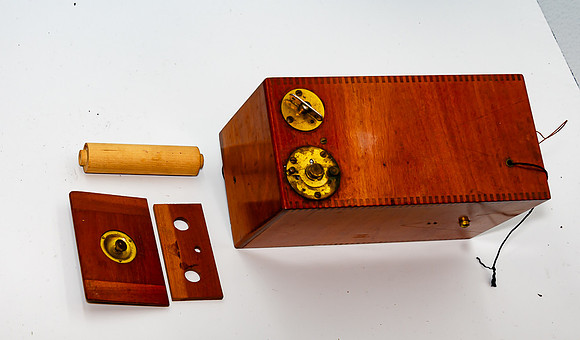
Ordinary Kodak Camera (c.1890–1895)(Models A, B, and C — Eastman Kodak Company)The
Ordinary Kodak series was designed to make roll‑film photography
affordable,
simple, and accessible to young amateurs.
🪵
1. Purpose & Position in Kodak’s Line - Introduced c.1891–1895 as a lower‑cost alternative to the Kodak #1.
- Marketed as the “Young Folks’ Kodak”—easy enough for children to use.
- Built to use the new Eastman roll‑film system but with simplified construction.
🧱
2. Construction & Design - Polished natural wood body (unlike the leather‑covered Daylight models).
- Fixed-focus lens and single-speed shutter.
- String‑set sector shutter: pull a string to cock the shutter.
- No viewfinder on Model A; instead, V‑shaped sighting lines on the body.
🎞️
3. Film System & Innovations - Used roll film for 24 exposures without reloading.
- Included:
-
- Exposure counter
- Automatic stop to prevent over‑advancing film
- Daylight loading (major convenience improvement)
- Film was wound on a core and loaded in a darkroom (Ordinary series), while the related Daylight series allowed loading in subdued light.
📐
4. Formats (A, B, C Models) - Model A: 2¾ × 3¼ inch images
- Model B: 3½ × 4 inch images
- Model C: 4 × 5 inch images; could use roll film or glass plates
💵
5. Pricing & Market Impact - $6 USD in 1894 — dramatically cheaper than the $25 Kodak #1.
- Helped expand photography to children, families, and budget‑conscious amateurs.
- Though innovative, the Ordinary and Daylight series were not very popular and were soon discontinued.